
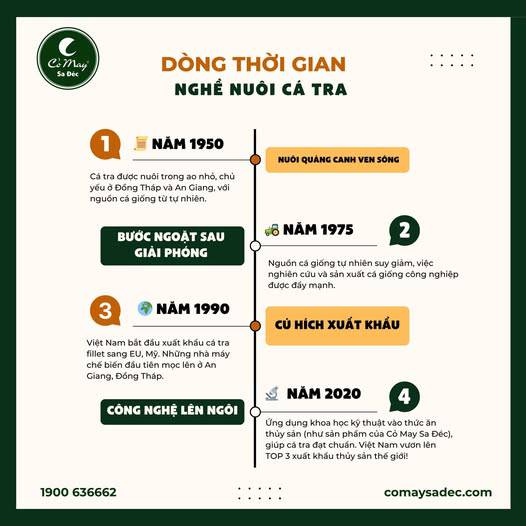
1950s – Extensive farming along rivers
Pangasius began to be farmed in earthen ponds and simple wooden cages, with fingerlings taken from natural sources. Farmers used agricultural by-products as feed – the origin of traditional farming.
Pangasius was raised in small ponds, mainly in Dong Thap and An Giang, with fingerlings sourced from the wild.
1975 – A turning point after reunification
Natural seed sources declined, leading to increased research and artificial fry production. Aquaculture cooperatives were established. Pangasius gradually became a commercial product, appearing in local markets.
1990s – Export breakthrough
Vietnam began exporting pangasius fillet to the EU and the US. The first processing plants were established in An Giang and Dong Thap. Pangasius farming expanded rapidly, forming large-scale farming zones in the Mekong Delta. The industry started applying modern aquaculture technology, gradually developing processing systems that met international standards, improving product quality, and expanding markets.
2020s – Technology dominance
Scientific and technological applications in aquafeed (such as products from Co May Sa Dec) help pangasius meet standards. Vietnam has risen to the TOP 3 seafood exporters in the world! Pangasius has become an important export commodity of Vietnam, affirming its indispensable role in the fisheries economy and establishing a reputable global-quality brand.

